We welcome article submissions from experts in the areas of coal, mining,
shipping, etc.
To Submit your article please click here.
|
|
|
Thursday, 26 May 16
GIANT ORE CARRIERS SET TO PLAY A BIGGER ROLE IN THE GLOBAL SHIPPING FLEET: CHINA EMBRACES VALEMAXES - RICHARD SCOTT
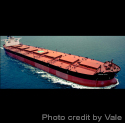 Another phase of the giant ships era is approaching. Chinese shipowners placed orders recently for 30 huge ‘valemax’ ore carriers. These vessels, with a 400,000 deadweight tonnes capacity, are the largest carrying dry bulk commodities. When the ships are delivered in 2018 and 2019, a smooth introduction into the China iron ore imports trade is likely, contrasting with the experience of their predecessors.
The new tonnage will join an existing fleet of 34 similar valemax VLOCs (very large ore carriers) built in the past few years, operated by shipowners in several countries. Originally the class was named ‘chinamax’, reflecting the intended destination for most of the iron ore cargoes carried by these ships, supplied from Brazil. A name change to valemax was decided by Brazilian mining company Vale, which developed the concept, when discharging at Chinese ports was blocked, a severe setback. But this difficulty was eventually resolved.
A new bulk carrier class emerges
An unusually long boom in the dry bulk freight market, over several years up to mid-2008, provided motivation for the valemax concept gestation period. High and volatile freight rates for all dry commodities on international routes were experienced. These elevated rates were especially notable in the size group of vessels widely employed within the global iron ore and some other commodity trades, ‘capesize’ ships carrying about 180,000 dwt tonnes.
China had become, since 2003, the world’s largest iron ore importer and annual volumes continued growing rapidly. As a key supplier, Brazil focused on this market with substantial growth potential. Among alternative suppliers, competition with Australia is particularly intense. Australian miners have a big transportation cost advantage when exporting to Asian destinations: a much shorter distance compared with Brazil. The distance to Chinese ports from Western Australia is one-third of that from Brazil to China, resulting in much lower freight rates
Vale’s strategy to improve its competitiveness was massive capital investment in shipping capacity. A new class of many and far larger vessels, under the mining company’s full control, was designed to exploit economies of scale, with the aim of greatly lowering transportation unit costs. Exposure to the heights and variations of the global ocean freight market, and reliance on independent shipowners operating in that market, would be hugely reduced, making the delivered cost of Brazilian iron ore more attractive.
In mid-2008 the strategy profile became clearer. An order for a series of twelve new valemax 400,000 dwt ore carriers was placed at a Chinese shipbuilding yard, and further newbuilding orders followed for similar ships. Also, long-term 20-25 years transportation contracts were agreed by Vale with several independent shipowners based in other countries who, in turn, placed orders for new similar vessels to service the contracts.
An especially notable agreement was made with South Korean shipowners STX Pan Ocean. Reportedly the world’s largest contract of affreightment, valued at $5.8 billion, it covered 300 million tonnes of iron ore from Brazil to China over 25 years, requiring eight valemaxes each carrying an average 12m annually.
The current fleet
Valemax ships are the leviathans of dry bulk shipping, more than twice as big as capesize bulk carriers, typical vessels in the large capacity category. Dimensions of valemaxes are: length 360 metres, beam (width) 65 metres, draft (depth below waterline) 23 metres. The hull is divided into seven cargo holds and productivity is enhanced by ability to be loaded very rapidly. Previous the record holder was a 365,000 dwt ore carrier built thirty years ago and still trading today.
A remarkably large number of valemaxes, 35 in total, was ordered by Vale and its three shipowner partners – STX Pan Ocean, Oman Shipping and Berge Bulk – in this round. Most orders were obtained by shipyards in China, accompanied by some placed in South Korea. Deliveries began in early 2011, and the majority had been completed by the end of 2013.
The table below shows the year of delivery from builders and current owners. One vessel is still under construction, so the present total is 34. Vale originally owned 19, more than half the total. During the past twelve months, Vale sold 12 ships to Chinese operators (China VLOC, China Ore Shipping and ICBC Leasing) following earlier leasing of four ships to another Chinese owner, Shandong Shipping.
Valemaxes are not the only VLOCs operating in the Brazil iron ore export trades. A large number of other big ore carriers is regularly employed. Many of these ships were originally built as tankers to carry crude oil, and were converted to ore carriers.
Calculations based on a snapshot view of recent (early May 2016) employment revealed that, excluding the valemaxes, 69 ships of 240,000 dwt and larger were involved in Vale iron ore export trades to China and numerous other destinations. All except one were actually in a range of 247,000 to 327,000 dwt. Converted former tankers numbered 32, almost half the total number, mainly 260,000 to 300,000 dwt, built in the 1990-1995 period and converted between 2008 and 2011.
Trading patterns
Generally, the maxim applicable is that the larger the ship, the more restricted the trading pattern. This basic feature applies to most ship types. Typically there are two constraints: port and berth dimensions and cargo handling facilities (including storage) at loading and discharging ports, and the volume and regularity of cargo flows. Canal restrictions are sometimes another limitation. Valemax 400,000 dwt ore carriers are restricted to a small number of trade routes.
The original rationale for valemax size vessels focused on employment in carrying massive and growing iron ore imports into China. When the current ships were ordered, China was already the dominant iron ore importer, receiving 444 million tonnes in 2008, a 53 percent share of global seaborne iron ore trade, of which Brazil supplied 101mt (23 percent).
Today’s volumes are much higher. China’s total imports reached 953mt in 2015, a 70 percent share of world seaborne iron ore trade. Brazil supplied 192mt, a smaller 20 percent proportion of the China import market, but the actual volume was almost double that seen seven years earlier. The current valemax fleet theoretically could carry about one-quarter of the trade from Brazil to China annually, over 53mt (assuming each vessel completed four trips). Consequently, there is ample potential employment. Moreover, some vessels participate in other trades.
Since valemax ore carriers were introduced, iron ore cargoes from Ponta da Madeira, Tubarao and Guaiba in Brazil carried by these vessels have been received in a number of countries around the world as well as China. Discharge ports include Taranto (Italy), Rotterdam (Netherlands), Sohar (Oman), Oita, Kimitsu and Kashima (Japan), Gwangyang and Dangjin (South Korea), Villanueva (Philippines) and Subic Bay (Philippines). An entirely new port terminal at Teluk Rubiah (Malaysia) started receiving shipments in early 2014.
Delayed role in China’s imports
During the period of almost four years following the introduction of valemaxes in 2011, only a small number of these ships were given permission to discharge in Chinese ports and the cargoes were less than full shiploads. Eventually, in early 2015, problems which had prevented extensive valemax participation in this trade were resolved.
How did the unanticipated prolonged delay in gaining access to Chinese ports occur? Before the first valemax was delivered from the shipbuilders in May 2011, opposition from China was intensifying. Later in that year, the China Shipowners Association expressed their view that employing valemaxes in this trade was monopolistic and represented unfair competition. Concern about port safety also was expressed. In January 2012, the Chinese government announced a formal ban on these vessels using Chinese ports. The competition issue seems to have been the main influence.
Long before the official ban, amid mounting opposition from the Chinese government to the original strategy, Vale had disclosed in October 2010 a modified plan involving transshipments. This plan featured valemaxes carrying iron ore to a port where cargoes could be offloaded into smaller ships acceptable at all final destinations. The regional distribution centre at Teluk Rubiah, Malaysia was designed. A further centre in the Middle East area at Sohar, Oman was planned.
Valemax size shipments started arriving at Sohar in September 2011, with full operations beginning in the following March. Arrangements were made also for another transshipment facility, a floating terminal at Subic Bay, Philippines, where valemax size cargoes could be transferred offshore to smaller bulk carriers. This became operational in February 2012, when the world’s largest dry bulk floating storage vessel (a converted tanker) arrived, and a second floating terminal was added in the next year. The land based distribution hub at Teluk Rubiah began receiving cargoes in early 2014, fully opening later in that year.
Foreshadowing an end to the dispute as opposition from China’s shipowners gradually receded, Chinese shipowning company Shandong Shipping leased four valemaxes from Vale towards the end of 2013. This progress was followed In September 2014 by Cosco signing a provisional cooperation agreement to buy from Vale, and charter back on long term 25-year charters, four vessels of this type. Another provisional contract with China Merchants Group was also agreed.
Eventually, early in 2015, China’s objections were removed and the ban was lifted. Later, several ports were officially permitted to receive the vessels – Dalian, Qingdao, Tangshan and Ningbo-Zhoushan. The first recorded full valemax cargo of iron ore, from Brazil, was received at Dongjiakou (Qingdao) at the end of July 2015.
In the past twelve months, since the lifting of the ban, China has firmly embraced the giant ore carrier concept. Three major purchases from Vale were finalised. In May 2015 Cosco bought four valemaxes for $445 million, for operation by China Ore Shipping (a new company 51 percent owned by Cosco and 49 percent by China Shipping Group, preceding the merger of the two holding companies). Soon after, in July, China Merchants Energy Shipping bought four valemaxes for $448m and set up a new operating subsidiary, China VLOC. Finally, in December, Industrial and Commercial Bank of China’s ICBC Leasing subsidiary purchased a further four ships for $423m.
What has the valemax strategy achieved?
When Vale’s original strategy became known, it was soon clear that it was industrial bulk shipping on a vast scale, one of the biggest arrangements of its type ever seen in the dry bulk sector. Given the enormous scale of capital investment involved, it is arguable that advantages for the mining company have been modest so far, mostly reflecting a shipping market environment evolving very differently to what was envisaged at the outset.
Varying conditions ranging from subdued to depressed have prevailed, in the dry bulk freight market, during much of the past five years since valemaxes started operating. Low open market rates over a long period diminished the economic justification for mega-size ships, greatly reducing envisaged savings in iron ore transport costs. The differential between freight rates from Brazil and the main export competitor, Australia was compressed, removing more benefit. However, some advantage has been gained by avoiding brief spikes in capesize rates.
Accompanying these general market aspects related to valemax employment, an inability to access Chinese ports regularly with fully-loaded ships for several years was a huge setback. Although a workable alternative plan was quickly put in place, featuring transshipment at various locations, it involved significant extra costs. These additional expenses partly offset gains from lower unit costs of transportation resulting from economies of scale.
Nevertheless there are still, potentially, benefits to be gained in the future over the remaining lifespan of the existing ships, two decades or more. A balanced view will be possible only much later during this period. If another long dry bulk freight market boom occurred, unlikely though that may seem based on present signs, the valemax strategy could prove to have been extraordinarily sound and far-sighted.
A contrasting approach by Vale’s principal competitors in the international iron ore market has been seen. Rio Tinto and BHP Billiton have adopted different strategies. Although Rio Tinto has invested in ore carriers to some extent, these are not the mega-size ships. BHP Billiton has remained focused mainly upon using the open freight market.
Future fleet enlargement
Underlining potential future advantages are plans, recently announced, to almost double the size of the present valemax fleet. This expansion presumably has been informed by performance already experienced, and probably reflects expectations of a fairly subdued freight market evolution in many of the years ahead.
During the past few months it was confirmed that three Chinese shipowners have placed orders with shipbuilders in China for 30 valemaxes to be delivered in 2018 and 2019, as shown in the table below. Reports indicate that Vale is chartering all the ships on long 27 years contracts of affreightment.
Although these orders have added to anxiety about future global bulk carrier fleet expansion, it seems clear that a large proportion of the new capacity is effectively replacement tonnage. Many vessels Vale is currently using, VLOCs converted from tankers, probably will reach or approach their life-cycle end by 2020 or earlier. Among these, numerous ships were built in the years up to 1993, and so will be twenty five or more years old by 2018.
The new valemaxes will assist in providing iron ore transportation on the Brazil to China route at the most economical cost. Enhanced competitiveness with other iron ore suppliers, especially Australia is likely to result. Another aspect is that full possession of the vessels by China-owned shipping companies is consistent with the national strategic aim to carry a higher proportion of the country’s trade in domestically-owned ships.
Article by Richard Scott, visiting lecturer, London universities & MD, Bulk Shipping Analysis | Hellenic Shipping News
If you believe an article violates your rights or the rights of others, please contact us.
|
|
Thursday, 14 April 16
AUSTRALIAN MINING SERVICES SECTOR SQUEEZED BY MINERS' COST CUTS - FITCH RATINGS
Fitch Ratings says mining services companies' revenues and margins will remain under pressure as miners continue to focus on reducing costs ami ...
Thursday, 14 April 16
DRY BULKERS' PRICES COULD BE HEADING UPWARDS AS BUYERS' APPETITE INCREASES - HELLENIC SHIPPING NEWS
Investment sentiment is beginning to trend upwards in the market for second hand dry bulk carriers. According to the latest weekly report from ship ...
Wednesday, 13 April 16
U.S COAL PRODUCTION IS EXPECTED TO DECREASE BY 16 PER CENT IN 2016; THE LARGEST ANNUAL PERCENTAGE DECLINE SINCE 1958 - EIA
EIA estimates that U.S. coal production in March 2016 was 52 million short tons (MMst), a 2 MMst (4%) decrease from the previous month and 29 MMst ...
Tuesday, 12 April 16
INDONESIA COAL BENCHMARK PRICE INCREASES FOR SECOND STRAIGHT MONTH
COALspot.com: The Indonesia Coal Benchmark Price Increases For Second Straight Month in April 2016.
The Director General of Mine ...
Tuesday, 12 April 16
NO FURTHER SIGNIFICANT COAL PRICE DECLINES IN THE FUTURE - FITCH
COALspot.com: Fitch does not expect further significant coal price declines because producers sector-wide are suffering losses while China and Indo ...
|
|
|
Showing 2476 to 2480 news of total 6871 |
|
 |
|
|
|
|
| |
|
 |
|
|
| |
|
- San Jose City I Power Corp, Philippines
- Mercator Lines Limited - India
- Toyota Tsusho Corporation, Japan
- The State Trading Corporation of India Ltd
- Africa Commodities Group - South Africa
- Wilmar Investment Holdings
- Commonwealth Bank - Australia
- Malabar Cements Ltd - India
- Agrawal Coal Company - India
- GN Power Mariveles Coal Plant, Philippines
- Neyveli Lignite Corporation Ltd, - India
- Xindia Steels Limited - India
- Goldman Sachs - Singapore
- Karbindo Abesyapradhi - Indoneisa
- VISA Power Limited - India
- Trasteel International SA, Italy
- Indian Oil Corporation Limited
- Globalindo Alam Lestari - Indonesia
- Krishnapatnam Port Company Ltd. - India
- International Coal Ventures Pvt Ltd - India
- Attock Cement Pakistan Limited
- Straits Asia Resources Limited - Singapore
- OPG Power Generation Pvt Ltd - India
- Ambuja Cements Ltd - India
- Videocon Industries ltd - India
- SMG Consultants - Indonesia
- Kideco Jaya Agung - Indonesia
- Parliament of New Zealand
- Alfred C Toepfer International GmbH - Germany
- Asia Pacific Energy Resources Ventures Inc, Philippines
- Edison Trading Spa - Italy
- Semirara Mining Corp, Philippines
- Siam City Cement - Thailand
- Thiess Contractors Indonesia
- Riau Bara Harum - Indonesia
- Jaiprakash Power Ventures ltd
- Parry Sugars Refinery, India
- Barasentosa Lestari - Indonesia
- Aboitiz Power Corporation - Philippines
- IHS Mccloskey Coal Group - USA
- Coalindo Energy - Indonesia
- Wood Mackenzie - Singapore
- Salva Resources Pvt Ltd - India
- Lanco Infratech Ltd - India
- TNB Fuel Sdn Bhd - Malaysia
- Eastern Coal Council - USA
- Planning Commission, India
- LBH Netherlands Bv - Netherlands
- India Bulls Power Limited - India
- GVK Power & Infra Limited - India
- Ministry of Mines - Canada
- Orica Australia Pty. Ltd.
- Ceylon Electricity Board - Sri Lanka
- Singapore Mercantile Exchange
- Bhatia International Limited - India
- European Bulk Services B.V. - Netherlands
- Dr Ramakrishna Prasad Power Pvt Ltd - India
- Minerals Council of Australia
- TeaM Sual Corporation - Philippines
- Kartika Selabumi Mining - Indonesia
- Pendopo Energi Batubara - Indonesia
- Meenaskhi Energy Private Limited - India
- Jorong Barutama Greston.PT - Indonesia
- Filglen & Citicon Mining (HK) Ltd - Hong Kong
- Maharashtra Electricity Regulatory Commission - India
- SN Aboitiz Power Inc, Philippines
- Sindya Power Generating Company Private Ltd
- Savvy Resources Ltd - HongKong
- Deloitte Consulting - India
- GAC Shipping (India) Pvt Ltd
- Carbofer General Trading SA - India
- Petrochimia International Co. Ltd.- Taiwan
- AsiaOL BioFuels Corp., Philippines
- Madhucon Powers Ltd - India
- Indika Energy - Indonesia
- New Zealand Coal & Carbon
- Borneo Indobara - Indonesia
- Merrill Lynch Commodities Europe
- Economic Council, Georgia
- Global Business Power Corporation, Philippines
- Cement Manufacturers Association - India
- Sakthi Sugars Limited - India
- Kobexindo Tractors - Indoneisa
- IEA Clean Coal Centre - UK
- Intertek Mineral Services - Indonesia
- Offshore Bulk Terminal Pte Ltd, Singapore
- Siam City Cement PLC, Thailand
- Bayan Resources Tbk. - Indonesia
- Marubeni Corporation - India
- Oldendorff Carriers - Singapore
- Petron Corporation, Philippines
- Energy Link Ltd, New Zealand
- The Treasury - Australian Government
- Coal and Oil Company - UAE
- Independent Power Producers Association of India
- Gujarat Mineral Development Corp Ltd - India
- Dalmia Cement Bharat India
- Chamber of Mines of South Africa
- Heidelberg Cement - Germany
- Sical Logistics Limited - India
- ICICI Bank Limited - India
- Metalloyd Limited - United Kingdom
- Iligan Light & Power Inc, Philippines
- Star Paper Mills Limited - India
- Truba Alam Manunggal Engineering.Tbk - Indonesia
- Gujarat Sidhee Cement - India
- Banpu Public Company Limited - Thailand
- Ministry of Finance - Indonesia
- Bhushan Steel Limited - India
- Manunggal Multi Energi - Indonesia
- CIMB Investment Bank - Malaysia
- Central Java Power - Indonesia
- Tamil Nadu electricity Board
- Romanian Commodities Exchange
- Gujarat Electricity Regulatory Commission - India
- Pipit Mutiara Jaya. PT, Indonesia
- Global Green Power PLC Corporation, Philippines
- Meralco Power Generation, Philippines
- Semirara Mining and Power Corporation, Philippines
- Sree Jayajothi Cements Limited - India
- Price Waterhouse Coopers - Russia
- Binh Thuan Hamico - Vietnam
- Mintek Dendrill Indonesia
- GMR Energy Limited - India
- Chettinad Cement Corporation Ltd - India
- Baramulti Group, Indonesia
- Therma Luzon, Inc, Philippines
- Indian Energy Exchange, India
- Posco Energy - South Korea
- Georgia Ports Authority, United States
- Orica Mining Services - Indonesia
- London Commodity Brokers - England
- Bank of Tokyo Mitsubishi UFJ Ltd
- The University of Queensland
- White Energy Company Limited
- Uttam Galva Steels Limited - India
- Bangladesh Power Developement Board
- Latin American Coal - Colombia
- Cigading International Bulk Terminal - Indonesia
- Anglo American - United Kingdom
- Bhoruka Overseas - Indonesia
- Rio Tinto Coal - Australia
- CNBM International Corporation - China
- Mercuria Energy - Indonesia
- Thai Mozambique Logistica
- Aditya Birla Group - India
- Bulk Trading Sa - Switzerland
- PowerSource Philippines DevCo
- MS Steel International - UAE
- Bukit Baiduri Energy - Indonesia
- Interocean Group of Companies - India
- Renaissance Capital - South Africa
- McConnell Dowell - Australia
- Essar Steel Hazira Ltd - India
- Mjunction Services Limited - India
- Miang Besar Coal Terminal - Indonesia
- ASAPP Information Group - India
- Bukit Makmur.PT - Indonesia
- Sarangani Energy Corporation, Philippines
- Makarim & Taira - Indonesia
- Formosa Plastics Group - Taiwan
- Timah Investasi Mineral - Indoneisa
- Eastern Energy - Thailand
- Larsen & Toubro Limited - India
- Directorate General of MIneral and Coal - Indonesia
- Ministry of Transport, Egypt
- Coastal Gujarat Power Limited - India
- Bahari Cakrawala Sebuku - Indonesia
- PNOC Exploration Corporation - Philippines
- Standard Chartered Bank - UAE
- Medco Energi Mining Internasional
- Electricity Authority, New Zealand
- Australian Commodity Traders Exchange
- South Luzon Thermal Energy Corporation
- Vijayanagar Sugar Pvt Ltd - India
- Vedanta Resources Plc - India
- Holcim Trading Pte Ltd - Singapore
- Sojitz Corporation - Japan
- Kumho Petrochemical, South Korea
- Billiton Holdings Pty Ltd - Australia
- PetroVietnam Power Coal Import and Supply Company
- Directorate Of Revenue Intelligence - India
- Tata Chemicals Ltd - India
- Central Electricity Authority - India
- Energy Development Corp, Philippines
- Indo Tambangraya Megah - Indonesia
- Asmin Koalindo Tuhup - Indonesia
- Jindal Steel & Power Ltd - India
- Leighton Contractors Pty Ltd - Australia
- Australian Coal Association
- Maheswari Brothers Coal Limited - India
- SMC Global Power, Philippines
- Indogreen Group - Indonesia
- Kepco SPC Power Corporation, Philippines
- Simpson Spence & Young - Indonesia
- Kalimantan Lumbung Energi - Indonesia
- Bharathi Cement Corporation - India
- Grasim Industreis Ltd - India
- Samtan Co., Ltd - South Korea
- Rashtriya Ispat Nigam Limited - India
- Kaltim Prima Coal - Indonesia
- Bukit Asam (Persero) Tbk - Indonesia
- Global Coal Blending Company Limited - Australia
- Altura Mining Limited, Indonesia
- Kapuas Tunggal Persada - Indonesia
- Ind-Barath Power Infra Limited - India
- Electricity Generating Authority of Thailand
- Sinarmas Energy and Mining - Indonesia
- Antam Resourcindo - Indonesia
- Kohat Cement Company Ltd. - Pakistan
- Power Finance Corporation Ltd., India
- PTC India Limited - India
- Vizag Seaport Private Limited - India
- Dong Bac Coal Mineral Investment Coporation - Vietnam
- Karaikal Port Pvt Ltd - India
- Indonesian Coal Mining Association
- Port Waratah Coal Services - Australia
|
| |
| |
|


